
E-Stamp vs Physical Stamp Paper: Difference, Validity and Cost

Priya Sharma
Priya covers digital signature regulations and compliance frameworks under Indian IT law. She has written extensively on Aadhaar-based authentication and document signing workflows.
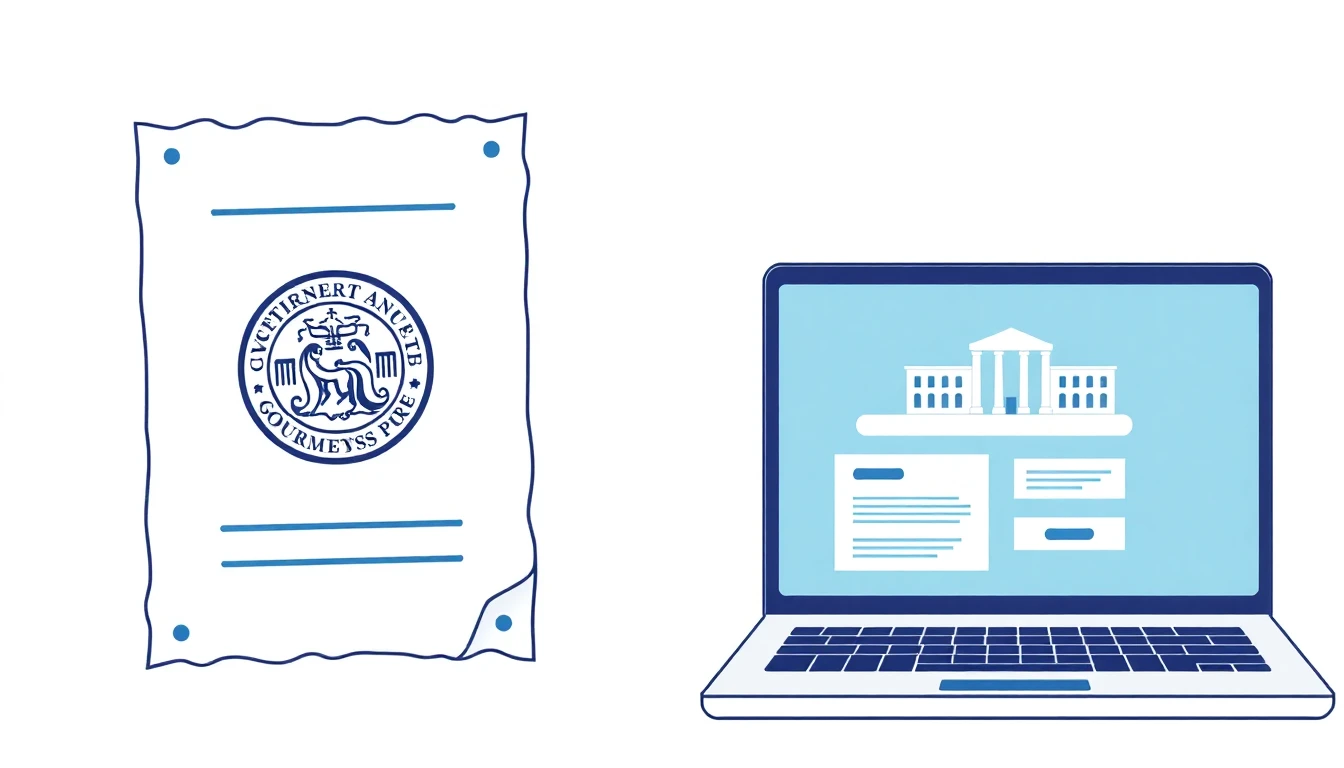
E-stamp paper is a digitally generated, government-issued stamp certificate that carries the same legal validity as physical stamp paper under the Indian Stamp Act, 1899 and the state stamp laws. The stamp duty is the same either way. What differs is how you buy it, how long it takes, and how easily someone can check that it is genuine.
Both exist to collect stamp duty, a tax that state governments charge on documents such as agreements, affidavits, bonds and property deeds. This guide covers the difference, how to check whether an e-stamp is valid, whether stamp paper expires, and when each option makes sense in 2026.
What Is Physical Stamp Paper?
Physical stamp paper is pre-printed, government-issued paper sold by licensed stamp vendors. Each sheet carries a serial number, the denomination of stamp duty paid, and official security features.
You buy it from a licensed vendor, usually found near district courts or sub-registrar offices, pay the stamp duty plus any vendor charge, and then have your document typed on the paper or attached to it. Physical stamp paper has been used in India for over a century, but many states have reduced or stopped its sale for higher denominations in favour of e-stamping.
What Is E-Stamp Paper?
E-stamp paper is a stamp certificate generated through the Stock Holding Corporation of India (SHCIL), which the Government of India appointed as the Central Record Keeping Agency for e-stamping, or through a state's own e-stamping system. Each certificate has a unique certificate number that can be checked online.
The certificate shows the state, stamp duty amount, purpose, and the names of the parties. You print it on plain paper and attach it to your document, or print your document text on the same sheet.
E-stamping was introduced largely to stop counterfeiting. The Telgi stamp paper scam in the early 2000s, involving fake stamp paper worth thousands of crores, showed how easily physical paper could be forged.
Is E-Stamp Paper Legally Valid?
Yes. E-stamp certificates issued through SHCIL or a state-authorised system are valid under the Indian Stamp Act and the state amendments that enabled e-stamping. Courts and registration offices treat a genuine e-stamp the same as physical stamp paper of the same value.
Two practical points:
- Use the right state and value. An e-stamp must be for the state where the document is executed and for the duty that applies to that document. A valid certificate of the wrong value still leaves the document under-stamped.
- Check with the receiving office. If you are executing a document before a sub-registrar, confirm in advance that the office accepts e-stamps for that document. Most do in states where e-stamping is operational.
How to Check Whether an E-Stamp Is Valid
You can verify an SHCIL e-stamp certificate online in a couple of minutes:
- Go to the SHCIL e-stamping website (shcilestamp.com) and open the option to verify an e-stamp certificate.
- Select the state and enter the certificate number exactly as printed.
- Fill in the other details the form asks for, such as the stamp duty type and issue date.
- Compare the result with your printed certificate. The names, amount, date and purpose should all match.
States that run their own systems, such as Maharashtra's GRAS based e-payment of stamp duty, have their own verification pages on the state revenue or registration department website. If the certificate does not verify, do not sign the document on it.
Does Stamp Paper Expire?
The Stamp Act does not set a deadline for using stamp paper after you buy it. The Supreme Court confirmed this in Thiruvengadam Pillai v. Navaneethammal (2008). The six-month period people often mention applies to claiming a refund for unused or spoiled stamps, not to using them.
In practice, some offices and banks still prefer stamp paper bought close to the date of signing, and a few state rules set their own conditions. If you bought the stamp paper long ago, check with the party or office that will receive the document.
State-Wise Availability of E-Stamp Paper
Most states and union territories now offer e-stamping, either through SHCIL or their own systems, and several have stopped selling physical stamp paper above a certain value. Coverage and limits change, so check two places before you buy:
- the SHCIL e-stamping website, which lists the states it serves; and
- your state's revenue or registration department website, which states whether physical stamp paper is still sold and for which denominations.
How to Obtain Each
Physical stamp paper:
- Find a licensed stamp vendor near the sub-registrar office or district court
- Ask for the denomination your document needs under the state schedule
- Pay the stamp duty and any vendor charge
- Receive the stamp paper, then print or type your document on it
- Sign the document
Time required: 30 minutes to a few hours, depending on the vendor and queue.
E-stamp paper:
- Use SHCIL's online service, your state's e-stamp portal, or an authorised collection centre
- Enter the party details, document type and stamp duty amount
- Pay online by net banking, UPI or card, or at the centre
- Download or collect the e-stamp certificate with its certificate number
- Print it on plain A4 paper and attach your document
- Sign the document
Time required: usually 15 to 30 minutes online, or one visit to a collection centre.
Cost Comparison
The stamp duty is the same whichever medium you use. It depends on the document type and the state schedule. What differs is the extra cost of getting it.
| Component | Physical Stamp Paper | E-Stamp Paper |
|---|---|---|
| Stamp duty | Per state schedule | Per state schedule (identical) |
| Extra charges | Vendor charge, varies | Small service charge at centres; varies online |
| Travel | Visit to a vendor | None if bought online |
| Time | 30 minutes to a few hours | 15 to 30 minutes online |
| Verification | Physical inspection | Online check by certificate number |
| Counterfeit risk | Exists | Very low, linked to a central record |
For low-value documents such as affidavits and many rent agreements, the cost difference is negligible and the time saved is the main reason to choose e-stamping. For high-value documents, e-stamping removes the risk of buying forged paper.
When Physical Stamp Paper Still Makes Sense
- Your state or denomination is not covered. If e-stamping is not available for your document's value in your state, use physical paper.
- No internet or collection centre nearby. A local stamp vendor may be the quickest option in remote areas.
- The receiving party insists. Some offices prefer physical stamp paper out of habit. It is not usually a legal requirement, but it can avoid delays.
When E-Stamp Paper Is the Better Option
- Rent agreements and leave and license agreements
- Employment agreements and service contracts
- Loan agreements between private parties
- Affidavits, indemnity bonds and declarations
- Partnership deeds and business agreements
- Any document you want the other party to be able to verify online
Combining E-Stamp Paper With eSign
E-stamping and eSign do different jobs. The e-stamp proves that stamp duty was paid. The eSign identifies who signed and records their consent. Together they let you complete many agreements without any physical paper: buy the e-stamp online, attach it as the first page of the PDF, and have every party sign with an Aadhaar OTP. Any later change to the signed PDF shows up in the signature panel of a PDF reader.
This works for documents such as rent agreements, affidavits, employment agreements and indemnity bonds. The guide on how to make a rent agreement online using eSign walks through the rent agreement case step by step.
What eSign cannot be used for. Schedule I of the IT Act excludes some documents from electronic signatures, even when they are on e-stamp paper: powers of attorney, wills, trust deeds, negotiable instruments such as promissory notes and cheques, and contracts for the sale or conveyance of immovable property such as a sale deed. These still need a physical signature. For a comparison of signing tools, see the best document signing platforms in India.
Quick Reference: E-Stamp vs Physical Stamp Paper
| Factor | E-Stamp Paper | Physical Stamp Paper |
|---|---|---|
| Availability | Most states and UTs | Varies; reduced in many states |
| How to get | Online or authorised centres | Licensed stamp vendors |
| Verification | Online by certificate number | Physical inspection |
| Counterfeit risk | Very low | Exists |
| Time to obtain | 15 to 30 minutes online | 30 minutes to a few hours |
| Legal validity | Same as physical | Same as e-stamp |
| Works with Aadhaar eSign | Yes, for eligible documents | Yes, if scanned into the PDF |
The direction of policy in India is clearly towards e-stamping. If your state offers it for your document, it is faster, easier to verify and equally valid. Pair it with an Aadhaar eSign on SignYu, at ₹15 per signature, to finish eligible agreements without printing anything.
Related Posts

E-Stamp Paper Online: How to Buy It, State by State [2026]
Buy e-stamp paper online on SHCIL: which states let you print at home, the step-by-step process, cos...
Leave and License Agreement in Pune [2026 Guide]
Leave and license agreement in Pune: learn stamp duty, registration, and key clauses under the Mahar...
Rent Receipt Format in Word: Download and Fill
Rent receipt format in Word for HRA claims. Learn what a rent receipt must contain under Indian tax ...
Sign docs in 2 min · ₹15